|
MENU
Home
Books
Horror Film Aesthetics
Horror Film Festivals and Awards
Vampire
Nation
Pentagon Possessed
Cost of Freedom
Manhattan
Sharks
Halloween
Candy
Hollywood
Witches
Short Works
Pursuits
Actor
Film Festival Director
Editorial Services
Media
Appearances
Horror Film Reviews
Blogs
Horror Film Aesthetics
Communist Vampires
Horror Film Festivals and Awards
Other
Business
Satire
Nicolae Ceausescu
Commuist Vampires
Stalinist Zombies
L'Internationale Song
Links
|
Manhattan Sharks continues a tradition of (often satirical) business novels and office fiction.
Here's a list of such books, and films, in no particular order...
|
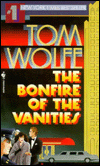
Bonfire of the Vanities, by Tom Wolfe
The ultimate
satire of 1980s New York excess. The darkly hilarious downfall of
a Wall Street bond trader, a self-proclaimed "Master of the Universe." A huge bestseller, and rightly so.
|

|
Bright Lights, Big City, Jay McInerney
A 1980s literary
classic, tracing the drug-induced downfall of an aspiring yuppie. He's well educated, but entry level, so he hasn't far to fall. Told
entirely in the second person, yet it works. |
|
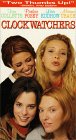
Clockwatchers,
directed by Jill Sprecher
A cubicle comedy
set in the 1990s, among pink collar workers with more modest goals than
1980s' yuppies. A film about office temps whose big dream is to
become permanent. Parker Posey and Lisa Kudrow -- what more can you
ask? |
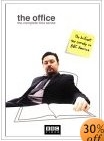 |
The Office, BBC TV
Britcom about
the dreary lives of office workers. Not really a sitcom, but a very
dark, black comedy. |
|
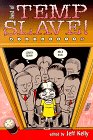
Best of Temp Slave, edited by Jeff Kelly
Satire, cartoons,
artwork, and true stories from the world of office temping. Read the review in the Weekly Universe. |
|
Wall Street, directed by Oliver Stone
Oliver Stone's dark
tale
of insider trading by Wall Street's elite. Featuring Gordon Gekko's
(played by Michael Douglas) memorable line: "Greed is good." |
|
Boiler Room, directed by Ben Younger
A dark tale of
insider trading (of non-existent companies) by Wall Street's rejects, in
their offices located on Long Island. Film pays homage to Wall
Street,
as when the characters watch it on TV. |
|
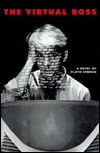
The Virtual Boss, by Floyd Kemske
Floyd Kemske
calls his novels "corporate nightmares." Here, an office is run by
a computer AI program that adapts to, and exploits, every employee's weakness. Imagine HAL 9000 running an office. |
|
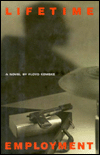
Lifetime Employment, by Floyd Kemske
Another of Kemske's
black comedy "corporate nightmares." Due to this company's paternalistic
policy of "lifetime employment," the only way to open up a spot for promotion
is to murder your superior. Office politics, Mafiosi style. A surreal Darwinian climb up the corporate ladder. |
|
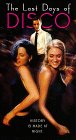
The Last Days of Disco, directed by Whit Stillman
It's early 1980s,
and these aspiring yuppies don't realize that disco is already dead. In
this film, we meet the same "Ivy League educated, yet entry job level"
social strata as Bright
Lights, Big City. A thoughtful film that grows on you with repeated
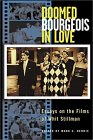
viewing. Fans of Stillman's films (Metropolitan, Barcelona)
may enjoy reading Doomed
Bourgeois in Love, a collection of essays about Stillman, edited by
Mark C. Henrie. |
 |
|
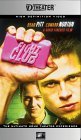
Fight Club, directed by David Fincher
A yuppie rebels
against corporate dehumanization and emasculation through a fight club. A place for society's male losers (clerks, wage slaves, unemployed) to
gather for the joy of fighting, to reconnect with their authentic, primal
masculinity. After they reject consumerism, lose fear of pain,
and stop caring what polite society thinks, they widen their agenda ... |
|
The Dilbert Principle, by Scott Adams
Wall
Street and Bonfire
of the Vanities examine high-powered yuppies and Masters of the Universe. Winners who were the 1980s' role models for the losers in Bright
Lights, Big City, Manhattan
Sharks, Boiler
Room, and The
Last Days of Disco.
By the downsized
1990s, losers had no such illusions. The office workers in Clockwatchers, Temp
Slave, and The
Virtual Boss had more modest goals -- best epitomized by Dilbert. |
|
Office Space, directed by Mike Judge
This satire by
Mike Judge (Beavis and Butthead) lacks the subtlety, incisiveness, or poignancy
of Clockwatchers,
but it has its moments. Commendable understated performances and
wry insights. |
|
Company Man, by Brent Wade
Corporate stress
from a black perspective. A buppie (black upwardly mobile professional)
tries to conform to white colleagues, while also feeling pressure from
blacks who think he's "acting white." |
|
The Man in the Gray Flannel Suit, by Sloan Wilson
Arguably the father
of the modern "corporate slave" genre. Its "men in gray flannel suits"
and "corporate men" were to the 1950s what yuppies became to the 1980s. |
|
|
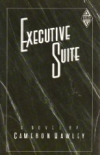
Executive Suite, by Cameron Hawley
Classic 1950s
novel -- basis for a 1954 film and short-lived 1976 TV series -- about
power struggle in a corporate boardroom.
|

|
Kings of Infinite Space, by James Hynes
A literature
professors falls from grace and is forced to work in a cubicle. Then
he discovers that some of his co-workers employ zombies to do their work
(the perfect office drone), and he is invited to join in their 'devil's
bargain.'
|
|
|
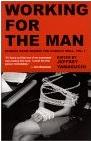
Working for the Man: Stories From Behind the Cubicle Wall, by Jeffrey Yamaguchi
Humorous true-life vignettes in cubicles. Similar to Temp Slave. |
|
|